中서 4300년 된 고대 도시 발견..대규모 인신공양 만연 > 종합 역사자료실

본문 바로가기
사이트 내 전체검색

종합 역사자료실

[고고학] 中서 4300년 된 고대 도시 발견..대규모 인신공양 만연

송화강 2019-09-26 (목) 23:47 6년전 14887  

4300년전 황성터는 고조선 건국연대와 유사.

목이 잘린 유골은 전쟁 포로였을 가능성
-게시자 주


中서 4300년 된 고대 도시 발견..대규모 인신공양 만연

입력 2018.08.27. 14:36 

자동요약
 
음성 기사 듣기
 
인쇄하기 새창열림
글씨크기 조절하기
 

[서울신문 나우뉴스]

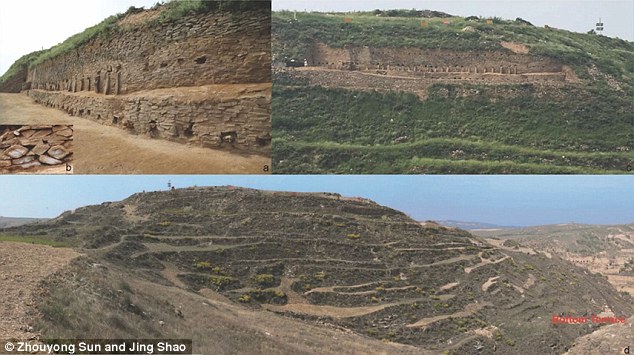
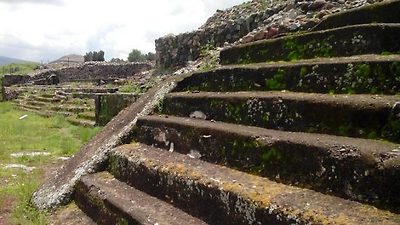
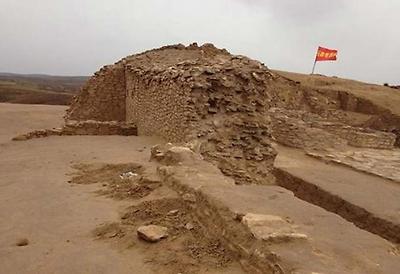
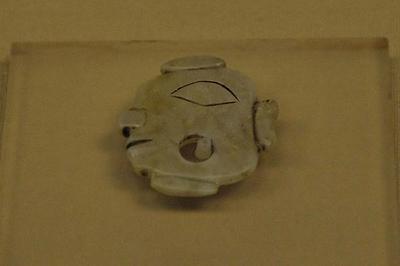
This figure shows images of the step pyramid. a) part of the stone buttresses of the second and the third steps of the pyramid; b) eye symbols that decorate the pyramid c) a view of the buttresses under excavation; d) a general view of the pyramid before excavation. Credit: Zhouyong Sun and Jing Shao


중국에서 약 4300년 된 고대 도시를 발견했다는 연구논문이 발표돼 화제가 되고 있다.

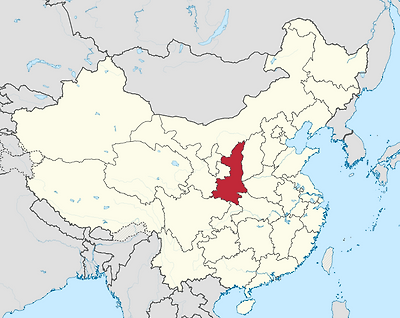
영국 일간 데일리메일 등 외신은 24일(현지시간) 중국 산시성 위린 선무(神木)현에 있는 스마오(石峁) 유적을 소개했다.

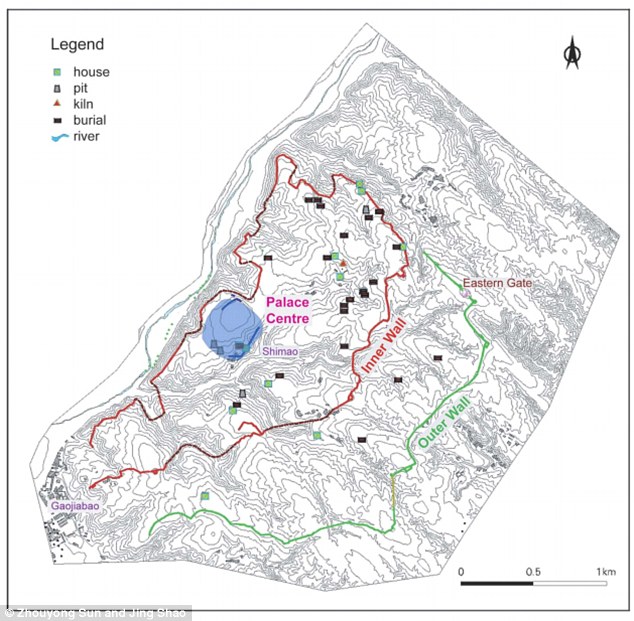
The ancient city of Shimao, showing the central 'pyramid' (blue), the inner defensive wall (red) and the outer wall of the city (green). Picture: Zhouyong Sun and Jing Shao

1976년 처음 발견된 스마오 유적은 초기에 작은 마을로 여겨졌지만, 2011년부터 대대적인 발굴 조사가 이뤄지면서 황성(皇城·황제가 있는 나라의 수도)이었던 것으로 밝혀졌다.

특히 이번 조사에서는 황토로 된 고지대에 피라미드식 층단이 만들어져 있고 그 위에 목조로 된 황궁이 있었던 것으로 밝혀졌다. 11층으로 된 층단의 높이는 최소 70m에 달해 당시 내성 밖 거주지는 물론 외성 밖 시골 지역에서도 황궁의 모습을 볼 수 있었다. 이는 황제의 권위를 상징하는 것이라고 한다.

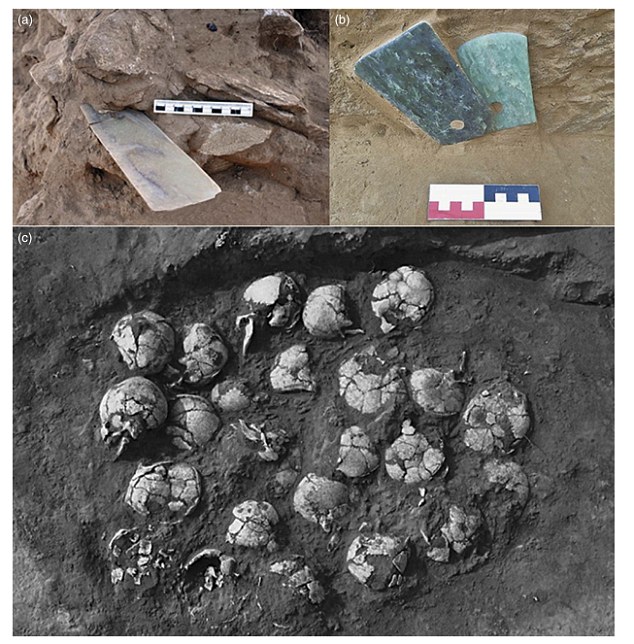
A sacrificial pit of human skulls discovered at Shimao. The people sacrificed may have been captives captured in war. This photo was first published in 2016 in an article in the Chinese language journal Kaogu yu wenwu. Credit: Photo courtesy Zhouyong Sun and Jing Shao

또 연구팀은 유적지에서 대규모 인신공양의 흔적을 발견했다. 총 6개의 구덩이에서 유골이 나왔는데 외성 근처에 있는 구덩이에는 목이 잘려 죽은 것으로 추정되는 두개골이 가득했다.

이뿐만 아니라 다른 곳에서도 유골과 제물이 발견됐다. 발견된 유물들은 중국 신석기 시대 만기인 롱산(龍山)문화 끝무렵부터 하(夏)나라 초기까지의 문화를 보여준다.

이에 대해 연구팀은 “이번 연구는 기원전 2000년까지 중원이 아니라 황토로 된 고지대가 정치적, 경제적 중심지를 대표하는 복잡한 사회의 중심지였음을 보여준다”면서 “중원 문명과 관련한 청동기 후기 시대의 핵심적인 상징들은 사실 스마오에서 훨씬 더 일찍 만들어진 것으로 밝혀졌다”고 말했다.

사진=Antiquity

자세한 연구 결과는 영국 고고학 학술지 ‘앤티쿼티’(Antiquity) 22일자에 실렸다.

윤태희 기자 th20022@seoul.co.kr


https://news.v.daum.net/v/20180827143604465


※※ 사진 하단 영문 캡션은 아래 기사의 것을 게시자가 보완한 것임

https://www.heraldsun.com.au/technology/science/pyramid-of-eyes-discovered-at-heart-of-4300yearold-city-in-northern-china/news-story


The Shimao Site in Shenmu County, Shaanxi


997E0A475B8761E631829E


9953AC375B8763823BCDF8

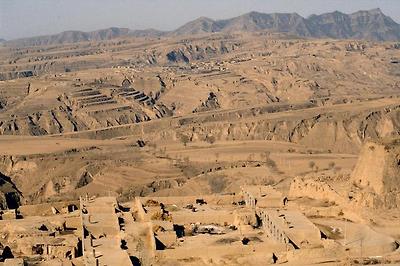
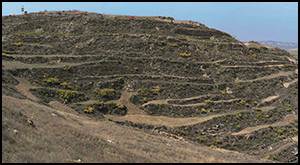
Loess landscape near Hunyuan, Shaanxi Province, China. (Till Niermann/ CC BY SA 3.0 )

https://www.ancient-origins.net/ancient-places-asia/shimao-city-ruins-massive-prehistoric-site-rewrites-chinese-history-008685


99D81D3E5B8765E212A787

998EC83E5B8765E226E739

https://www.ancient-origins.net/ancient-places-asia/shimao-city-ruins-massive-prehistoric-site-rewrites-chinese-history-008685


99E1154B5B87678A1B2E01

 Shaanxi Province(위키백과)


990C18505B89E7AB19C469

서울신문


99EE87505B89E7AC09E2F6


99B4B0465B89E84A106376


https://m.blog.naver.com/PostView.nhn?blogId=kmoon0922&logNo=221051330315&proxyReferer=https%3A%2F%2Fwww.google.co.kr%2F


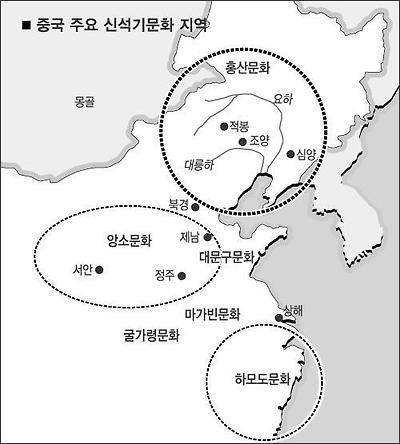
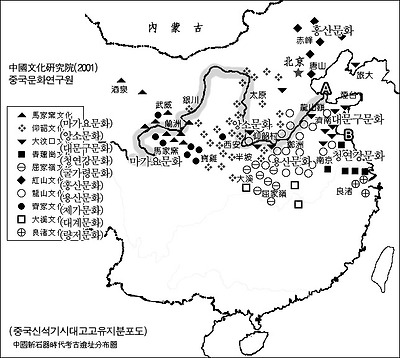
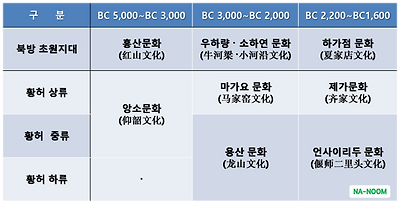
단군 신화는 분명 시베리아 숲에서 들어왔다고 보기 힘들다. 그 신화의 내용을 보면 환웅과 그 무리는 선진 문명의 세계에서 이주해 왔다. 그들은 세계를 조직적으로 다스린 경험이 있는 사람들이었다. 따라서 환웅 세력이떠나온 곳은 적어도 주변보다 나은 문명권이어야 한다. 기원전 24세기경의 상황을 고려하면 시베리아보다는 황하 중류의 앙소문화 지역이 그러한 조건에 더 부합한다.

-정형진, <수시아나에서 온 환웅>


https://m.blog.naver.com/PostView.nhn?blogId=jsyoum&logNo=100160724091&proxyReferer=https%3A%2F%2Fwww.google.co.kr%2F


When peripheries were centres: a preliminary study of the Shimao-centred polity in the loess highland, China

 
Abstract

S0003598X18000315_figAb.jpeg?pub-status=live

Chinese civilisation has long been assumed to have developed in the Central Plains in the mid to late second millennium BC. Recent archaeological discoveries at the Bronze Age site of Shimao, however, fundamentally challenge traditional understanding of ‘peripheries’ and ‘centres’, and the emergence of Chinese civilisation. This research reveals that by 2000 BC, the loess highland was home to a complex society representing the political and economic heartland of China. Significantly, it was found that Later Bronze Age core symbols associated with Central Plains civilisations were, in fact, created much earlier at Shimao. This study provides important new perspectives on narratives of state formation and the emergence of civilisation worldwide.


Copyright
 
Corresponding author
*Author for correspondence (Email: lijaangchina@gmail.com)
 
References
BrunsonK. 2011Zhongguo xinshiqi shidai wanqi dongwu liyong de bianhua ge’an yanjiuSandai kaogu 4146158.Google Scholar
CampbellR. 2009Towards a networks and boundaries approach to early complex polities: the late Shang caseCurrent Anthropology 50821848https://doi.org/10.1086/648398 CrossRef | Google Scholar
CampbellR. 2014Archaeology of the Chinese Bronze Age: from Erlitou to AnyangLos Angeles (CA)Cotsen Institute of Archaeology.Google Scholar
CattelainP. 2006Apparition et évolution de l’arc et des pointes de flèches dans la Préhistoire européenne (Paléo-, Méso-, Néolitique), in P. Bellintani (ed.) Catene operative dell’ Arco preistorico4566TrentoGiunta della Provincia Autonoma di Trento.Google Scholar
ChenL.XiongJ.ShaoJ. & SunZ.2016Shaanxi Shenmu Shimao chengzhi jisikeng chutu tougu yanjiuKaogu yu wenwu 2016(4):134142.Google Scholar
ChenX. 2012. Hexi zoulang ji qi linjin diqu qingtong shidai yicun yanjiu. Unpublished PhD dissertation, Jilin University.Google Scholar
DaiX. 2016Beifang diqu Longshan shidai de juluo yu shehuiKaogu yu wenwu 2016(4): 6069.Google Scholar
DaiY. 1993Shenmu Shimao Longshan wenhua yuqi tansuoGugong wenwu yuekan 1993(5): 4455.Google Scholar
DengC. 1997Dongya Xianqin yazhang zhuwentiZhongguo wenhua yanjiusuo xuebao 1997325332.Google Scholar
DengS. 1993Yetan Huaxi xitong de yuqiGugong wenwu yuekan 1993(6): 6071.Google Scholar
Di CosmoN. 2002Ancient China and its enemiesCambridgeCambridge University Press.https://doi.org/10.1017/CBO9780511511967 CrossRef | Google Scholar
FuN. 2007. Shiqian zhi shi’er shiji Zhongguo Beifangdiqu de dongxi wenhuajiaoliu. Unpublished PhD dissertation, Inner Mongolia University.Google Scholar
GlatzC. & CasanaJ.2016Of highland-lowland borderlands: local societies and foreign power in the Zagros-Mesopotamian interfaceJournal of Anthropological Archaeology 44127147https://doi.org/10.1016/j.jaa.2016.09.001 CrossRef | Google Scholar
GuW. & ZhangS.2005Henan Gongyishi Huadizui yizhi Xinzhaiqi yicunKaogu 2005(6): 36.Google Scholar
GuoQ.SunZ. & ShaoJ.2016Shimao waicheng dongmenzhi he zaoqi chengjian jishuKaogu yu wenwu 2016(4): 88101.Google Scholar
HanJ. 2007Laohushan wenhua de kuozhang yu duiwai yingxiangZhongyuan wenwu 2007(1): 2026.Google Scholar
HeN.YanZ. & SongJ.2003Taosi chengzhi faxian Taosiwenhua zhongqi muzangKaogu 2003771774.Google Scholar
JaangL. 2011Long-distance interactions as reflected in the earliest Chinese bronze mirrors, in L. von Falkenhausen (ed.) Beyond the surface: the Lloyd Cotsen study collection of Chinese bronze mirrors, volume II, studies3449Los Angeles (CA)Cotsen Institute of Archaeology.Google Scholar
JaangL. 2015The landscape of China’s participation in the Bronze Age Eurasian networkJournal of World Prehistory 28179213.https://doi.org/10.1007/s10963-015-9088-2 CrossRef | Google Scholar
LiM. 2016Settling on the ruins of Xia: archaeology of social memory in early China, in G. Emberling (ed.) Social theory in archaeology and ancient history291327CambridgeCambridge University Press.Google Scholar
LiM. 2017Chong fan XiaxuKaogu xuebao 2017287316.Google Scholar
LinY. 1986A re-examination of the relationship between bronzes of the Shang culture and of the Northern Zone, in K.C. Chang (ed.) Studies of Shang archaeology237273New Haven (CT)Yale University Press.Google Scholar
LinduffK. 1995Zhukaigou, steppe culture and the rise of Chinese civilizationAntiquity 59133145.https://doi.org/10.1017/S0003598X00064358 CrossRef | Google Scholar
LiuL. 2004The Chinese Neolithic: trajectories to early statesCambridgeCambridge University Press.Google Scholar
LiuL. & ChenX.2003State formation in early ChinaLondonDuckworth.Google Scholar
LiuL. & ChenX. 2012The archaeology of China: from the Late Paleolithic to the Early Bronze AgeCambridgeCambridge University Press.CrossRef | Google Scholar
PengK. & ZhuY.1995New research on the origin of cowries in ancient ChinaSino-Platonic Papers 68121.Google Scholar
Shaanxisheng & Yulinshi (Shaanxisheng Wenwu Kaogusuo & Yulinshi Wenwu Baohu Yanjiusuo)2005Shenmu XinhuaBeijingKexue chubanshe.Google Scholar
ShaoJ. 2016Shilun Shimao chengzhi de niandai ji xiujian guochengKaogu yu wenwu 2016(4): 102108.Google Scholar
ShelachG.RaphaelK. & JaffeeY.2011Sanzuodian: the structure, function and social significance of the earliest stone fortified sites in ChinaAntiquity 851126https://doi.org/10.1017/S0003598X00067405 CrossRef | Google Scholar
SunQ. 2008Zhoudai yongyu zhidu yanjiuShanghaiGuji chubanshe.Google Scholar
SunZ. 2016Gongyuanqian di sanqianji Beifang diqu shehui fuzahuaguocheng kaochaKaogu yu wenwu 2016(4): 7079.Google Scholar
SunZ. & ShaoJ.2016a. Wengcheng suyuan: yi Shimao yizhi waicheng dongmenzhi wei zhongxinWenwu 2016(2): 5056.Google Scholar
SunZ. & ShaoJ. 2016b. Mamian suyuan: yi Shimao yizhi waicheng dongmenzhi wei zhongxinKaogu 2016(6): 8289.Google Scholar
SunZ. & ShaoJ. 2017Shimaocheng: Tuwei hepan shenmi gucheng Fenhe Taosi yidiyiyouZhongguo guojia dili 2017(10): 142151.Google Scholar
SunZ.ShaoJ.ShaoA.KangN.QuF. & LiuX.2013Shaanxi Shenmuxian Shimao yizhiKaogu 2013(7): 1524.Google Scholar
SunZ.ShaoJ.ShaoA.KangN.QuF.LiuX. & BaiH.2015Shaanxi Shenmuxian Shimao yizhi Houyangwan, Hujiawa didian shijue jianbaoKaogu 2015(5): 6071.Google Scholar
SunZ.ShaoJ.ShaoA.ZhaoX.YangG.KangN.ZhouJ.LiJ.QuF.LiuX.WeiX.XuK. & GaoS.2016Shaanxi Shenmuxian Shimao yizhi Hanjiagedan didian fajue jianbaoKaogu yu wenwu 2016(4): 1424.Google Scholar
SunZ.ShaoJ.DiN.KangN.ZhaoY.ShaoA. & XiaN.2017Shaanxi Shenmuxian Shimao chengzhi Hangchengtai didianKaogu2017(7): 4656.Google Scholar
von FalkenhausenL. 1993On the historiographical orientation of Chinese archaeologyAntiquity 67839849.https://doi.org/10.1017/S0003598X00063821 CrossRef | Google Scholar
WangW. & SunZ.2011Shimao yuqi de niandai ji xiangguan wentiKaogu yu wenwu 2011(4): 4049.Google Scholar
WangX.HaiJ.ZhangG.BaiY.ZhangY.JiaW.AnG.SunX.LiangX. & GaoZ.20162015 nian Shanxi Xingxian Bicun yizhi fajue jianbaoKaogu yu wenwu 2016(4): 2533.Google Scholar
WangY. 2012. Qijiawenhua yuqi de kaoguxue yanjiu. Unpublished MA dissertation, Jilin University.Google Scholar
XuH. 2009 Zuizao de ZhongguoBeijingKexue chubanshe.Google Scholar
YanZ. & HeN.2005Shanxi Xiangfen Taosi chengzhi 2002 nian fajue baogaoKaogu xuebao 2005307346.Google Scholar
YangJ. & CaoJ.2007Luelun Zhongguo Beifangdiqu gudai youmuminzu wenhua fazhanmoshiJilindaxue shehuikexue xuebao2007(5): 140146.Google Scholar
YeX. 2013Yushi zhilu yu Huaxiawenming de ziyuanyilaiShanghai Jiaotong daxue xuebao 2013(6): 1826.Google Scholar
ZhangL. [L. Jaang]2012. Cong Longshan dao Erlitou: yi Songshan nanbei wei zhongxin. Unpublished PhD dissertation, Peking University.Google Scholar
ZhangT. & DingY.2016Shiluoluoshan Longshan gucheng ji xiangguan wenti qianlunKaogu yu wenwu 2016(4): 4551.Google Scholar
ZhaoH. 2016Shaanxi Shenmu Shimao yizhi kaogu fajue yanjiu de jinzhan ji xueshu yiyiZhongguo wenwu bao August 233.Google Scholar
ZKKSShanxisheng(Zhongguo Shehui Kexueyuan Kaogusuo & Shanxisheng Linfenshi Wenwuju)2015Xiangfen TaosiBeijing:Wenwu chubanshe.Google Scholar
https://www.cambridge.org/core/journals/antiquity/article/when-peripheries-were-centres-a-preliminary-study-of-the-shimaocentred-polity-in-the-loess-highland-china/EA48B7FEF5512D41D615DC3480DE0DDC


SNS로 공유하기

이름
비밀번호
자동등록방지
자동등록방지 숫자를 순서대로 입력하세요.

회원로그인

최신 댓글
  • 게시물이 없습니다.

접속자집계

오늘
249
어제
500
최대
4,666
전체
1,069,600


Copyright © 한퓨쳐. All rights reserved.